Chris Hotchkiss on Growth Amid Shifting Identity
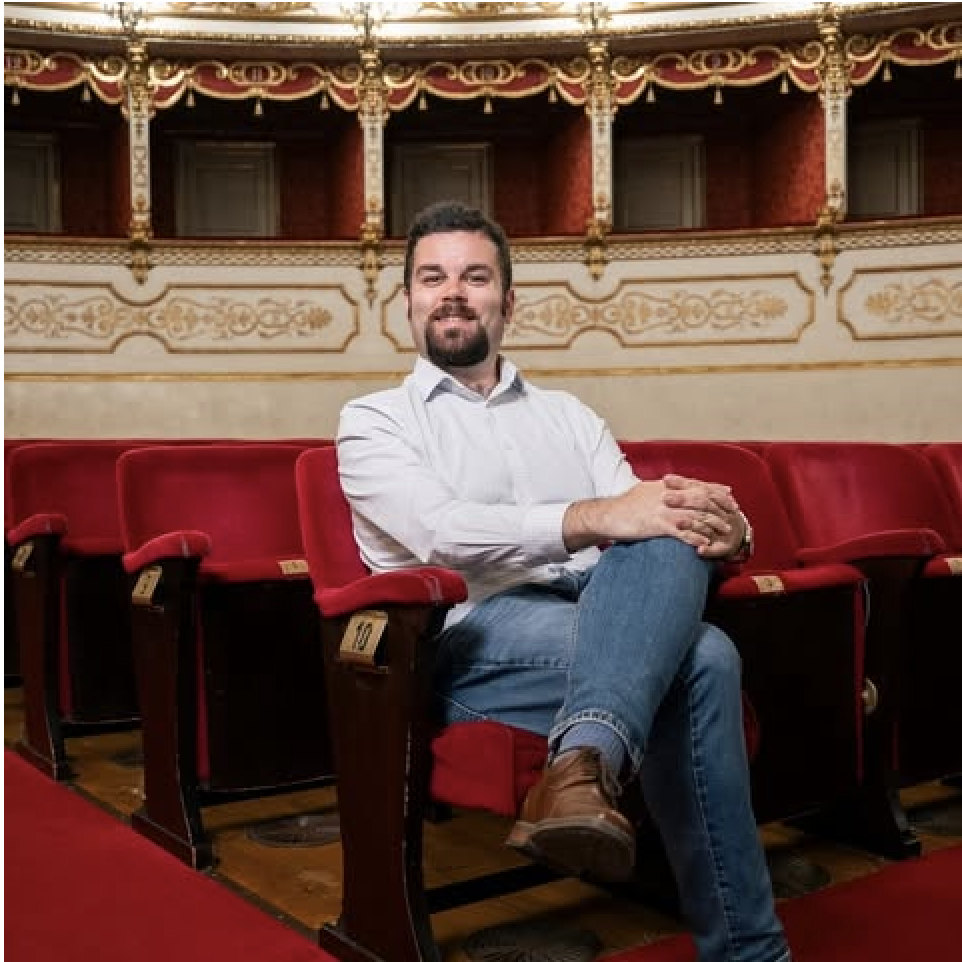
Chris Hotchkiss
One afternoon in early March of 2018, my life changed forever.
I was getting ready for an audition with the United States Coast Guard Band, a good, well-paying job that carried personal meaning for me. My grandfather had been in the Coast Guard and taught at the Academy as his last tour of duty before retiring. I was going through the usual process of preparing the audition repertoire — lots of practice, recording myself and listening back to make changes. Though I was new to the professional audition circuit, I was feeling like I could make it happen, if not with the Coast Guard, somewhere else eventually. At that time, I was working as a substitute teacher and living in my parents' house while practicing to win a clarinet job, which had been my dream since I was a kid. Luckily for me, my colleagues at the schools in which I was subbing knew of my talents as a musician and would call me in to sub for absent music teachers as often as they could. This was a perfect situation, since the music teachers typically did not have as heavy of a load as the academic teachers, so the free periods presented great opportunities to practice during the day in between rehearsals and lessons. One day, in between lessons, I was sitting in one of the back rooms practicing for the audition when I felt this twinge in my left arm I had never felt before. I stopped for a few minutes, picked the instrument up again and attempted to play again. I felt it again. It was as if my fingers had forgotten what they were supposed to do. I stopped playing, put the instrument away and chalked it up to fatigue. I'd try again tomorrow.
Over the next few days and weeks, the issues persisted. I could only play for a few minutes at a time before my arm needed a break. And when I would play, it was nowhere near my usual level of performance. I knew something was wrong, but pushed on anyhow, as that was what I was taught to do. Even under these circumstances, I managed to get things to a point where I was good enough to take the audition, and traveled to New London, CT, where the Coast Guard Band is located. I did not advance past the first round. I checked out of the hotel early and drove back home in a state of shock. This was something serious, something I had not experienced before. It was as if my entire world had fallen apart. The entirety of who I was seemed like a ghost now, never to be seen again. I got back home, laid on the couch and just stayed there for what seemed like hours. I was not sure of what to do, as what I had learned in school did not prepare me for this.
I originally went to school to be a music teacher. I caught the teacher bug when I was in high school, as I had great music teachers around me and I had the idea that I wanted to be exactly like them when I grew up. As I went through college, I found out that I could not be a teacher in the public schools. The amount of bureaucracy that existed in the public schools even then was so immense that I quickly lost interest in becoming a full-time teacher. It was around that time that my teacher in college started to plant seeds in my mind that I should consider going to graduate school for performance. He was a great teacher, no nonsense, and not afraid to tell you when things were bad and you needed to shape up. With that came the old-school mentality about injuries — you play through them, no matter what. At that time, I was having issues with my right wrist and fingers; one neck strap and wrist stabilizer later, I thought the issues were fixed and never really gave it a second thought. What I should have done was take some time to rest, see a doctor, or change my technique. I did none of those things and just kept going, because that's what you were supposed to do.
After finishing up my bachelor's degree, I did end up going to graduate school for clarinet performance. Here was my shot, I thought. If I did really well and performed to the best of my ability, I would be set and have a long career as a performer. What happened was the total opposite. Lesson after lesson, I became so disengaged that I could not see straight anymore, unsure of what I was doing and why I was even there in the first place. I finished the first year and spent the summer preparing to come back stronger, only to have to change teachers and start back from square one again. Due to this change, things seemed to be working well again. I stayed an extra year for a performer's certificate in order to have two years with the same teacher, and to continue to rebuild my confidence and mindset back to where it had been. By the end of the certificate program, my confidence was not where it had been previously, but certainly better than where it was as of late, so I thought: mission successful, time to go back home, keep practicing and win a job.
Having not been in a great state the last few years, what I should have done was take some time off and give my next move some real thought. I did not do that, and instead kept going down the path I was on. This ultimately led to that day in March, 2018, when my life changed forever.
After the failed audition and injury that had happened before then, I spent the next several months going through a grieving process at the loss of losing something that was near and dear to me, my professional performing career. Something fundamental needed to change in order to move forward, and after many hours of thinking, reflecting, and meditating, I came to realize my whole concept of who I was needed to change. I spent the next several years trying to figure this out, with each step of the process marked by a milestone.
Within six months of the injury occurring, I started to regain some semblance of confidence back and started to feel the need to change my situation. After receiving coaching on how to write a résumé, cover letter and interviewing, I found a part-time job working as an administrator for the New Jersey Symphony in the education office. Here, I could use my background in education to affect kids positively. It was a great job, but had its drawbacks, the details of which I did not find out about until later. The orchestra was going through some restructuring and my work was affected. About this time, I asked the orchestra if I could do a summer internship, with the intention of coming back as a better employee. They agreed, and I took a position at a classical music festival that summer.
At this point, I was still thinking of myself as a performer who did administrative work on the side to pay the bills. I hoped to be able to go back to performing later once I had healed. I spent that summer running the day-to-day operations of the festival, and getting rave reviews for my work, which I thought was the level of what anybody else would have done. My confidence started to come back at this point, which I needed. The people I met at the festival — faculty, students and staff — were all great people, and some of them remain close friends today. The day after I got back from the festival, I saw a job posting for a full-time operations position at the New England Conservatory Preparatory School. I applied, and after accepting the job, I finished up at the NJSO and moved to Boston.
During this time, I was still not sure of how to adjust to my new identity — shifting from performer to administrator, with performing now something I did on the side rather than the center of my identity. I had barely touched my instrument even though music was still around me. I needed the break from it, to not only heal, but to change my relationship with music. Even so, when I saw my clarinet, it would bring back some painful memories that I was trying to run from. I needed to be around music in order to accept what had happened, not forget it. People never really forget the negative things that happen to them, even subconsciously; the scars and wounds will always be there. It is how you frame them in your mind that not only gives them meaning, but determines how you move forward more positively.
After moving to Boston, I started my job at NEC, only for everything to be closed in six months due to the COVID-19 pandemic. Sitting in my apartment with my roommates, trying to work for a program I barely knew completely online was something that was unexpected. As I reached this point, I was presented with opportunities to learn new skills. I learned how to edit videos, broadcast recitals through social media channels, make changes to a website and, most importantly, work with people to give them what they needed in order to succeed. On a personal level, while most people were feeling the need to socialize being locked away at home, I spent quite a bit of time by myself, taking drives through the Massachusetts countryside and taking long walks around Walden Pond trying to make sense of everything that was going on, not only in the world, but with myself as well — in the mind, body, and soul.
The psychological, mental, and physical scars of my journey were evident, and healing them required time and honest conversation. Those drives and hikes during COVID were some of the most healing experiences and they were exactly what I needed. I began to fully accept my experiences, understand that life is not meant to be linear and that the path put in front of you will not always be easy but it is what you make of it that counts. With the help of a lot of reading, I began to see the bigger picture: that the only constant in these experiences was myself, and I needed to forgive myself. I was so angry at myself for not recognizing the signs earlier, and I had been carrying that blame without fully realizing it. I needed to take ownership of the situation I was in, rather than trying to push blame onto other people, or circumstances outside my control or let myself off with excuses. If, at any of the points along the way, had I chosen a different path, could I have "saved" what I had? It's hard to tell, but the fact of the matter is that I did not do that, and have to accept the consequences of those choices.
True growth and change comes from within, and I needed to go through these experiences in order to find out who I truly am. I am still a musician, just not in the sense I thought I would be. I still perform, but I am not a performer. I am still an educator, though I do not currently teach. Once those realizations came to me, more doors started to open.
In 2021, I felt the need to change jobs; I noticed a job opening, an opportunity that, if I could get it, could set me up for a career. I applied and ended up getting the job. It was at The Juilliard School, close to home, friends, and family. I leapt at it, and came back home. As I started at Juilliard, I applied many of the lessons I had learned, both personal and professional, to my new role and thrived in the environment I found myself in, as I had in my previous administrative jobs. If I could keep doing this, then more opportunities would come. And they did.
I soon had the opportunity to do Essentials of Orchestra Management with the League of American Orchestras, which I'd learned of at the music festival I worked at and had long wanted to do. It was a great ten days of learning, networking and reflecting. By the end of the program, I realized I had much more to give to this field and a responsibility to help ensure it survives for future generations. The ability to make things happen has always been there. What I had lacked was the right skillset, one my traditional training had never given me. It was then that I found the Global Leaders Institute for Arts Innovation MBA program. As a fellow of this program, I've found unexpected interests: designing entrepreneurship curricula in higher education, musicians' health, and advocating for field-wide innovation to truly move the arts forward toward more sustainable pathways. These were not random discoveries. They were the natural result of having lived the gap between what arts training prepares us for and what a life in this field actually requires.
On a personal note, after eight years of not knowing, I recently started the process of getting treatment for my injury. After an initial consultation, they believe what I have may be radial tunnel syndrome, which occurs when the radial nerve gets pinched from overuse of a tendon or muscle in the arm. This has been a significant moment, as this condition is treatable through physical therapy, and I have begun that process now.
One afternoon in March 2018, my life changed forever. I could not have known then what that change would ultimately mean. What I know now is this: there is a difference between seeing the path and walking it. I had to lose everything I thought I was in order to find out who I actually am. I am still finding out. And I would not change any of it.